By: Michelle K. Berry
“I just really like classes where I get to do more than take exams.” That was a quote from a student in a General Education course that I taught not long ago. I am proud to be part of a department that offers students opportunities to do just that. Indeed, the Department of History at the University of Arizona and the Public History Collaborative are committed to ensuring that undergraduate and graduate students have opportunities to learn in “experiential high impact” settings. That fancy term just refers to teaching practices that offer students a chance to participate actively in their history education. Educational research shows that when students “do,” they learn, and for history students at the University of Arizona, these opportunities take a variety of forms.
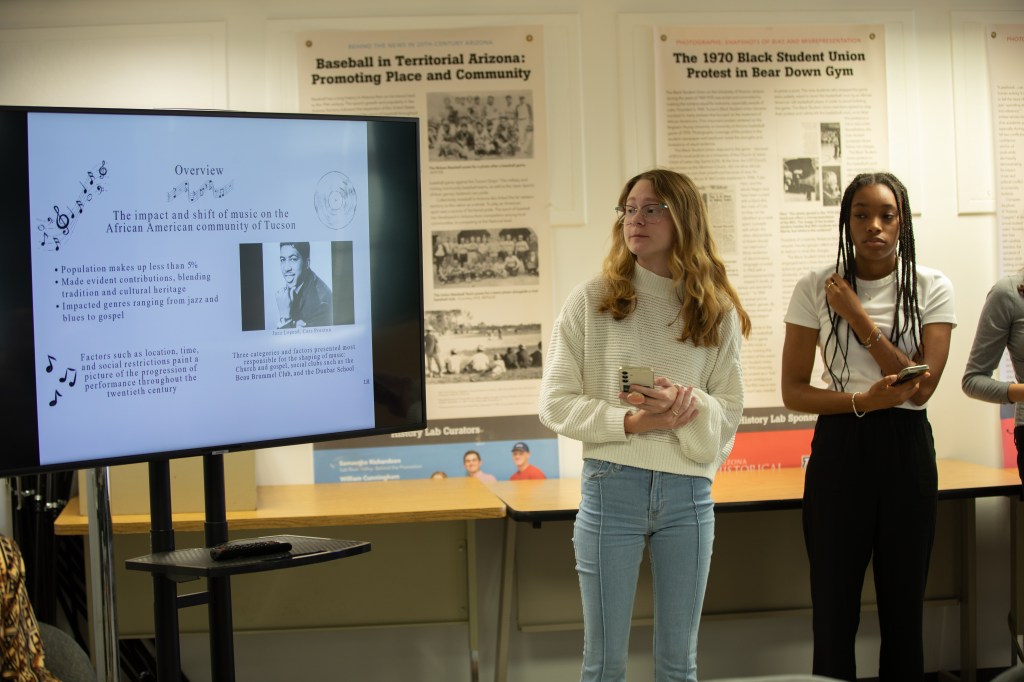
One of the most consistent approaches to experiential learning in the department is when individual instructors create classroom experiences to allow students to experience project-based learning. Two excellent examples of this are Katherine Morrissey’s 2024 Tucson Matters General Education course and my own 2024 graduate class on inclusive environmental history. The former is designed to allow students to partner with a local Tucson museum to address a particular research or exhibit need for the museum. In 2024, students in Morrissey’s class worked with the African American Museum of Southern Arizona (AAMSAZ), to research and present ideas for potential exhibits. The photo below shows how students’ research on the renaming effort for Tucson’s Mansfield Park (renamed in 2025 to Doris J. Thompson park after longtime African American community leader Doris Thompson) was then envisioned as a potential display for the museum. The proposed display would highlight not just the park but also the students’ research into the Sugar Hill Neighborhood and Doris J. Thompson’s community involvement more generally. Applying research to a public history display requires a variety of skills on the part of students. They must creatively distill information down to the most accessible and engaging content. They must figure out which parts of their research are most relevant for the museum’s needs. And they must think empathetically about the audience who will be consuming their work and write and present it appropriately. Finally, they must communicate their research and their ideas to one another (collaboration is an essential component of Dr. Morrissey’s class) and to their community partner, the AAMSAZ). Experiential education is simply an approach to teaching that provides students the opportunities to practice skills that will last a lifetime while learning important information about the past.

Since the course focuses on the themes of power, privilege, and marginalization, the community partnerships that Dr. Morrissey seeks tend to be museums and community-based organizations that prioritize underrepresented or historically excluded groups. AAMSAZ fit the bill for the Fall 2024 iteration of the course. For an excellent recap on the class and the resulting projects see this article from the College of Social and Behavioral Sciences. Like the very best project-based and experiential learning, the class emphasizes teamwork, real world partnerships, and public displays of learning and ideas.
“…all genuine education comes about through experience…”
John Dewey, Experience and Education
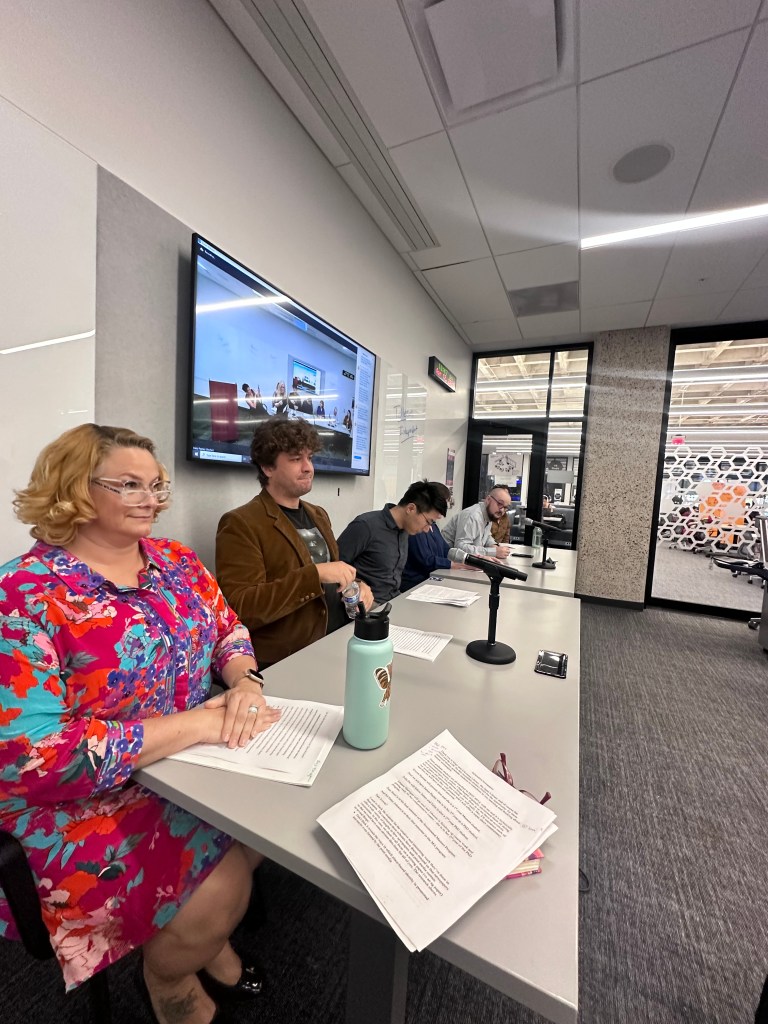
In the Spring of 2024, graduate students in HIST 695, had the opportunity to collaborate with the UArizona Main Library in the Sustaining Arizona’s Communities through Historical Newspapers symposium.
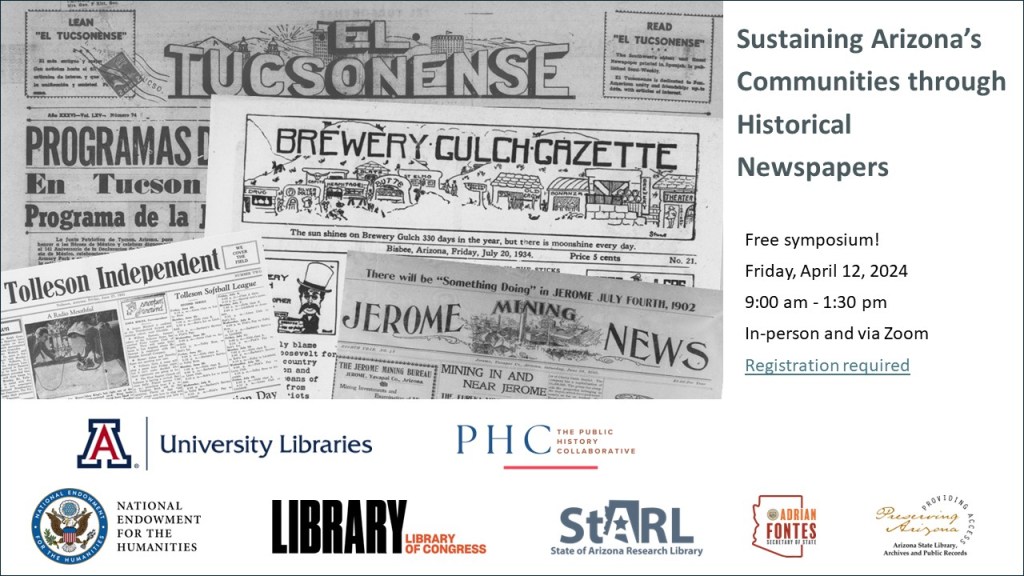
This experiential education opportunity meant that graduate students worked on a semester-long research project in order to present at the National Endowment for the Humanities-sponsored public symposium on the Chronicling America newspaper digitization project. The PHC had helped to organize the symposium and, as PHC lead instigator and committee chair, I served on the advisory committee so the idea to have graduate students participate seemed like a no brainer! One of the highlights of the symposium was the panel that the History graduate students organized to showcase their research on a topic of their choosing in an Arizona newspaper that had been newly digitized by the project. UArizona libraries and the Arizona State Library have digitized hundreds of historic newspapers across the country that can be found at the Library of Congress “Chronicling America” database. In the case of the graduate student projects, newspapers like the Ajo Copper News were utilized to learn about topics that ranged from the 1918 influenza epidemic to “urban” pastimes, to miners’ masculine identities in copper mines to the culture of coolness (as in not hot) in Arizona during the late 19th and early 20th centuries. Students also had the fantastic opportunity to meet then NEH Chair Shelley Lowe. The newspaper digitization project was a profoundly interesting and useful public service until the NEH funding was revoked by the Trump Administration in 2025. Still that initial digitization lives on and several of the graduate students are at work on scholarly articles to submit to the Journal of Arizona History.
“Digitizing historic newspaper is incredibly valuable because it allows more people to participate in the historical process using a huge repository of information without facing institutional or physical barriers. Through this research, I learned that reading through sources like these allows you to see and incorporate things you wouldn’t have otherwise realized were important to the story you are telling.”
~Zane Rossi, BA Class of 2023 and MA Class of 2024
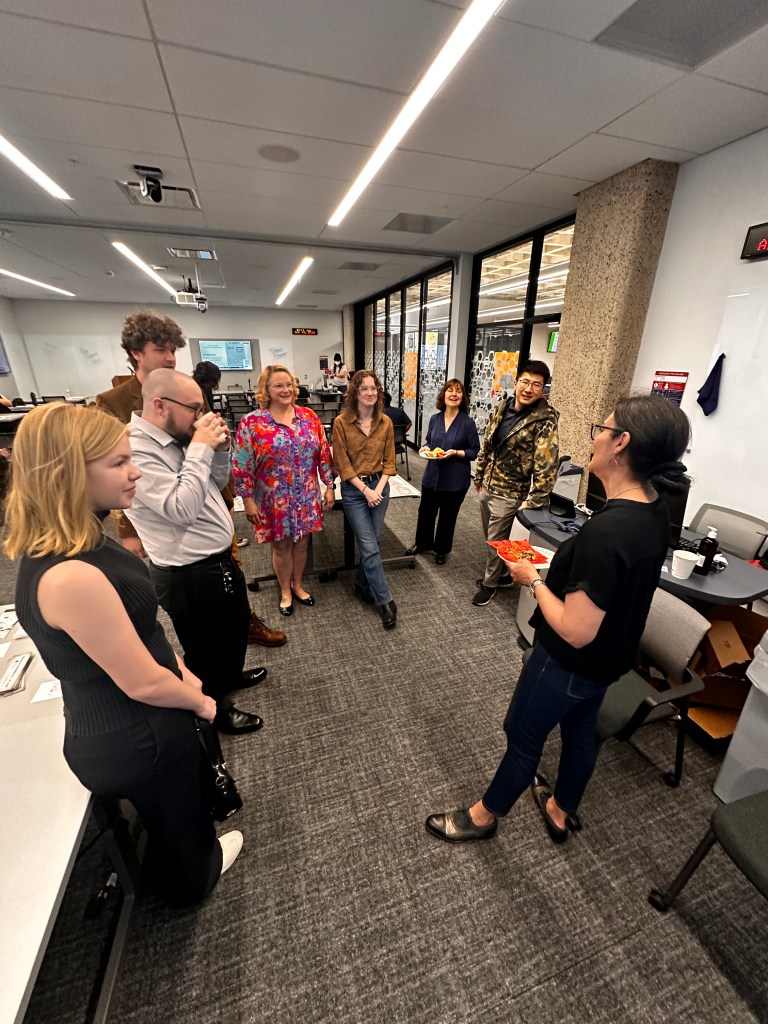
History Graduate Students left to right: Zane Rossi, James Paules, Gwyen Raamat, Kit Johnson, Johanne Harrigan, and Zelin Pei and Undergraduate History major Hannah Fackrell (foreground) meet Secretary Lowe. Photo by: Michelle K. Berry 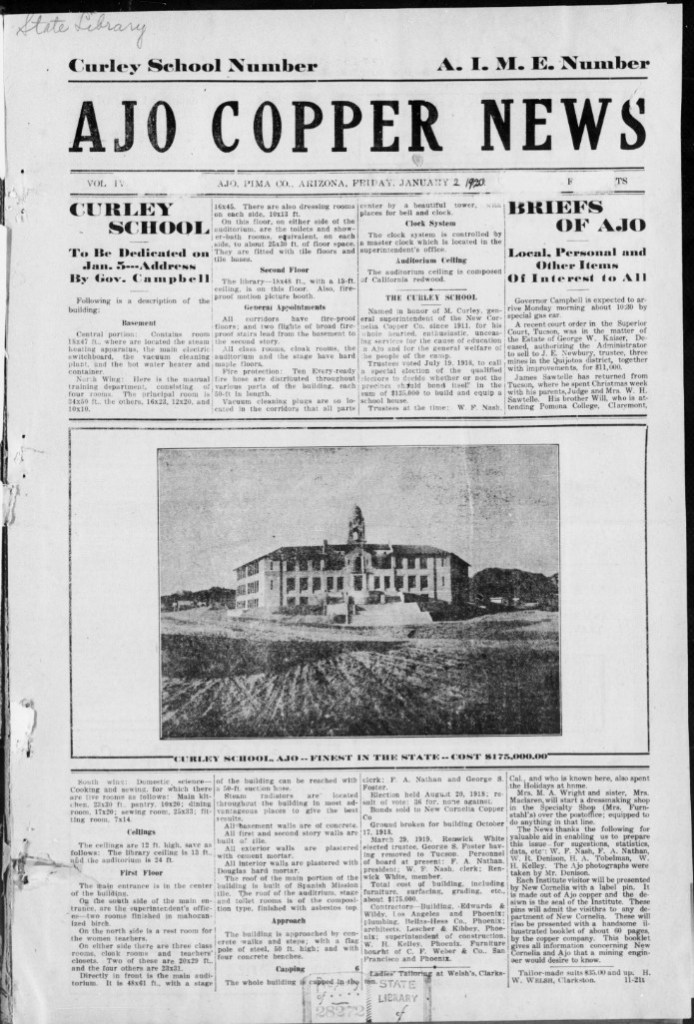
Graduate students left to right: Gwyen Raamat, James Paules, Zelin Pei, Zane Rossi, Johanne Harrigan, Kit Johnson
While experiential learning can and does happen in individual classes as the two example above show, the Department of History and the PHC also nurture opportunities for students to engage with the larger university community and apply their learning and skills in settings that transcend any single class. This was the case in both 2024 and 2025 with the Prospecting the Past Undergraduate Research Symposium.
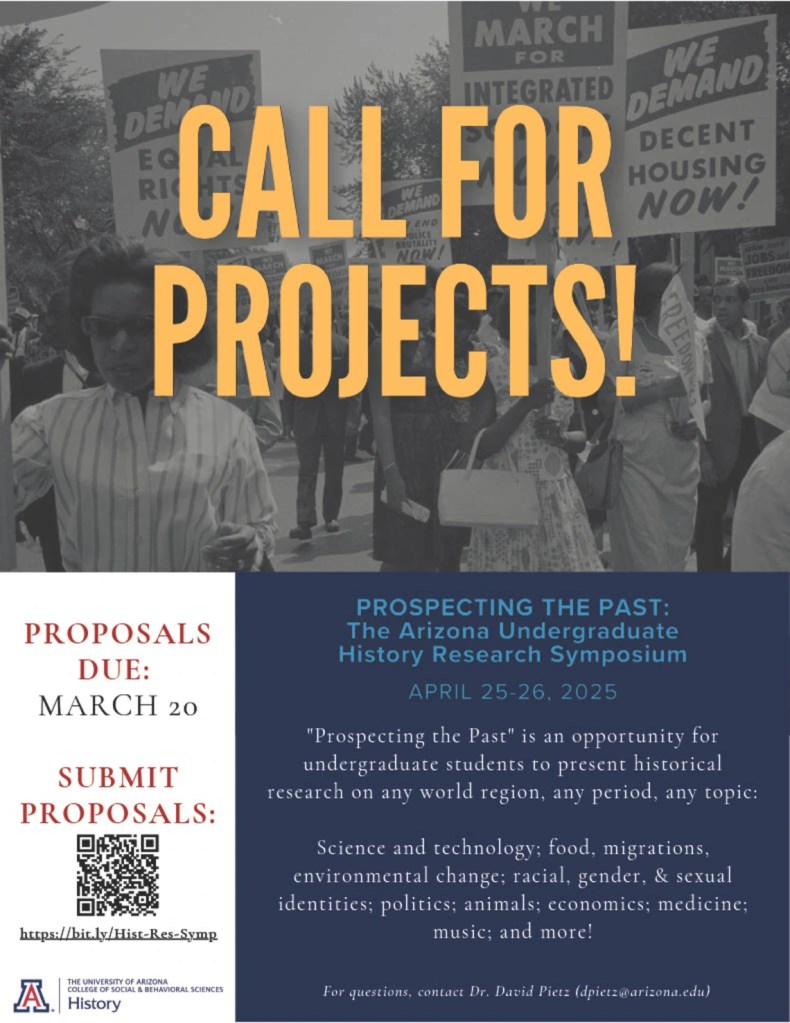
The symposium offers undergraduates in any major to present their work in the professional setting of an academic conference created just for them. Supported by the Provost Investment Fund, the symposium is in its second year. One hundred undergraduates have participated in the two years, and they are treated to an opening dinner on Friday night with nationally renowned keynote speakers. In 2024, students heard from Trevor Getz about graphic novels and other innovative ways to communicate history, and in 2025 they learned about adventures in the archives from Pulitzer Prize finalist Megan Kate Nelson.
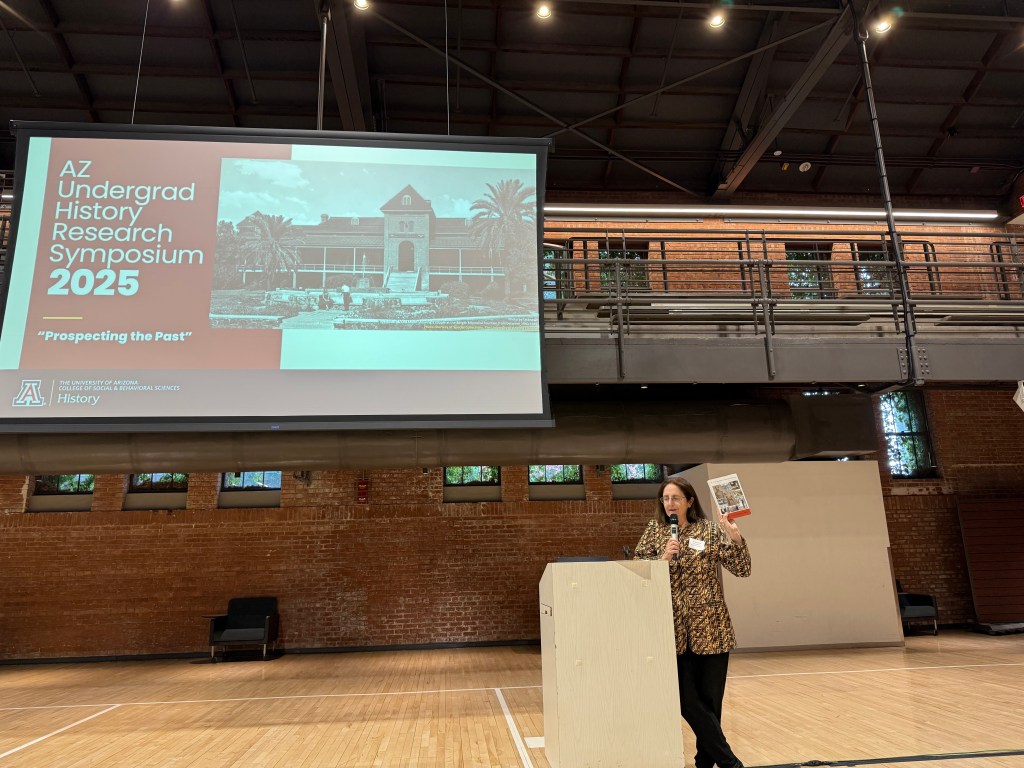

During the symposium on Saturday, each student is part of a panel with a faculty commenter and chair. To see the impressive array of topics for 2025, click here. The symposium will be back for its third year in Spring 2026!
I am so glad I decided to participate in this symposium.  It was a lot of fun and much less scary than I expected.  It was a great experience to get under my belt.
~ Naomi Heit

Photo by: Michelle K. Berry
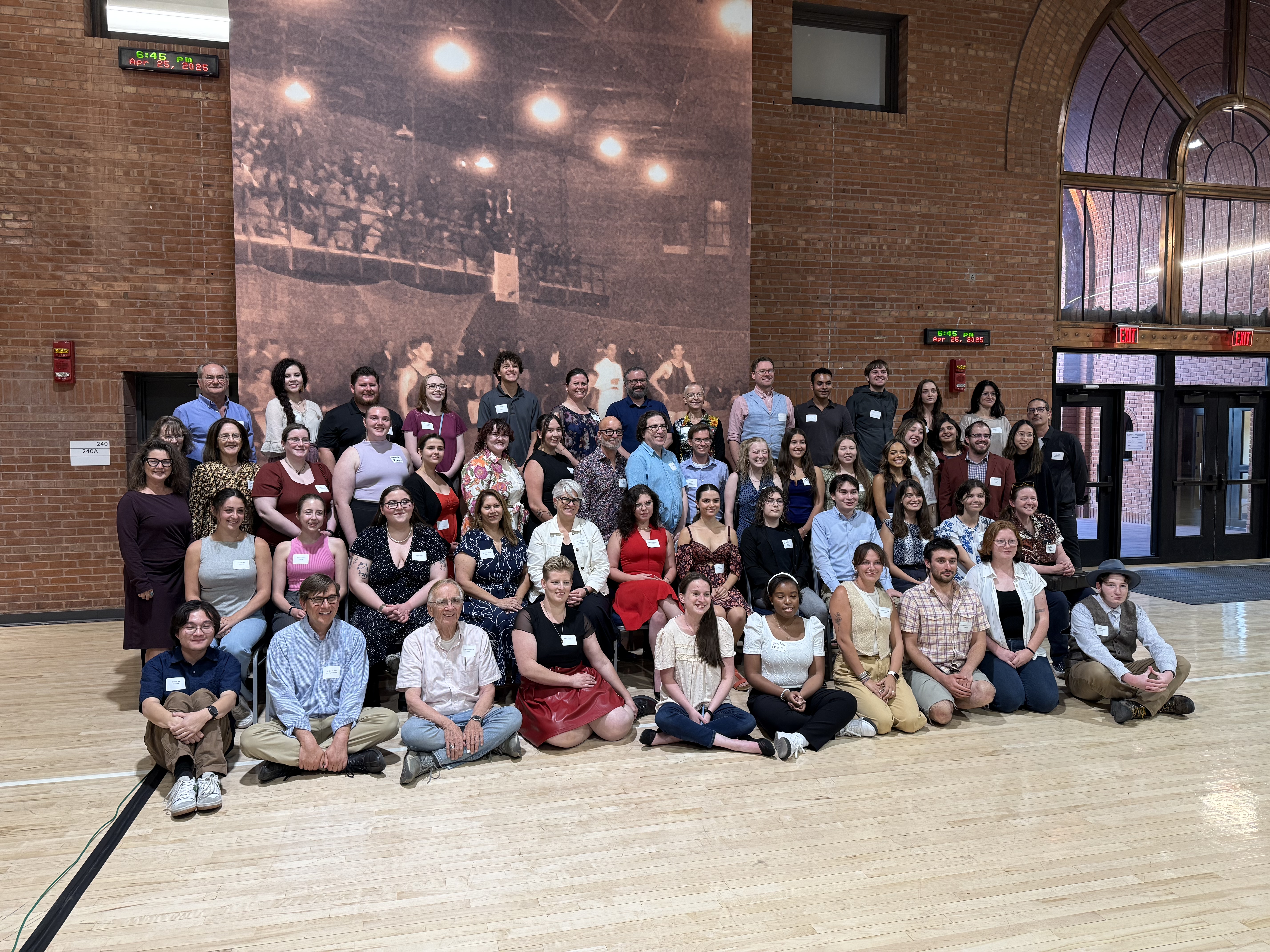
Photo by: Michelle K. Berry


 snapshots
Leave a comment