By: Michelle K. Berry
In April, 2024, the Public History Collaborative and the UNESCO Chair in Environmental History at the University of Arizona, David Pietz, teamed up once again to offer another program. This time, the goal was to bring southern Arizonans together to learn about and consider the history and future of water in the Sonoran Desert.
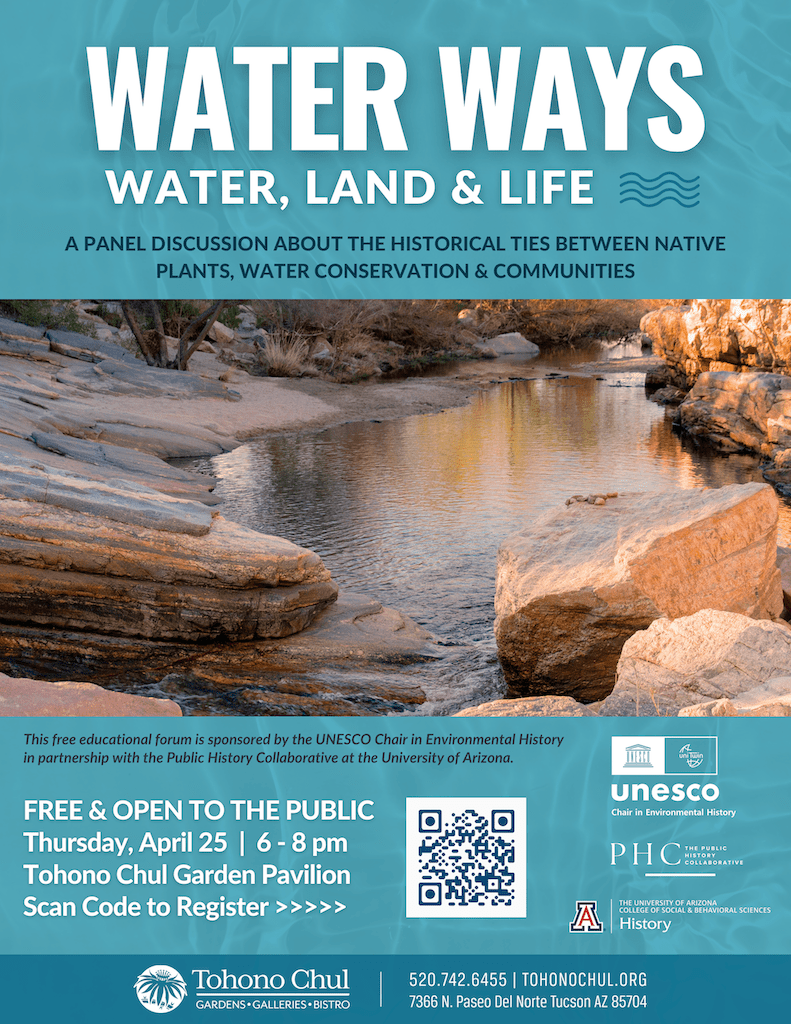
The event was hosted by Tohono Chul Gardens, a beloved Tucson space of plants, pollinators, and education since 1985.
Over 100 people attended the evening that featured talks by the Director of Tucson Water (John Kmiec), an expert on the water quality crisis in South Tucson in the 1980s (Denise Moreno-Ramirez, PhD), an advocate and provocateur of native plants (Carianne Funicelli), and delicious prickly pear margaritas.
Attendees learned about the importance of planting native plants for water conservation and pollinator friendly landscapes. They learned about the community action taken by residents of South Tucson in the 1980s when they learned their water had been poisoned by industrial waste. And they heard from the director of Tucson Water about the past and the future of Tucson’s municipal water supply (both quality and quantity).
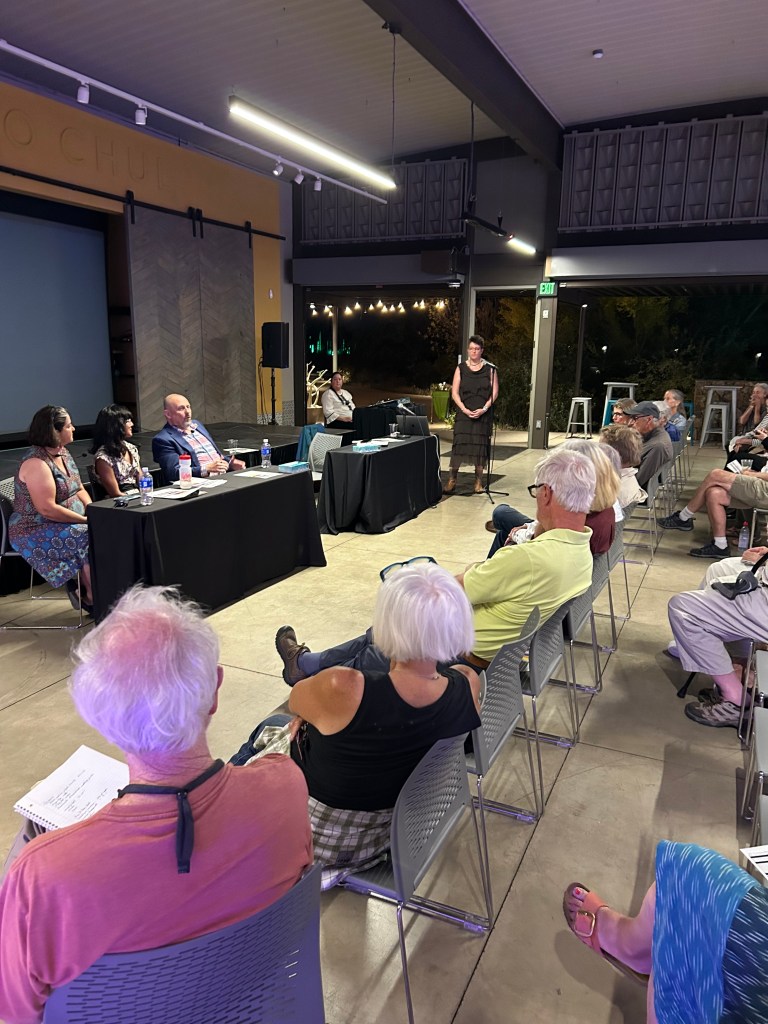
Presidential Postdoctoral Fellow Denise MO Ramirez shared the stories from her dissertation work on collecting oral histories of those harmed in the TCE crisis of the 1980s (and beyond). The oral histories had their own dedicated website at the University of Arizona, but at the writing of this blog, that site is not available. You can still hear some of the interviews, such as the one below, by visiting the Voices Unheard YouTube page dedicated to them.
The groundwater recharge projects are particularly interesting in light of the historic drought the Tucson Basin and the Colorado River Lower Basin are currently experiencing. From 2000-2022 recharge was relatively successful at least close to the recharge stations. Since 2022, precipitation has been scarce in southern Arizona and in the Colorado River basins that provide the water from the Central Arizona Project to recharge the aquifer nearly 1 million people rely on. Those topics and more were explained by Mr. Kmiec. For information on Tucson Water’s drought preparedness plans, visit their website.
Attendees walked away with a better understanding of change over time with regard to the importance of native plants to water conservation, the legacy of toxic waste dumping, environmental justice efforts (failures and successes), and the science and engineering of groundwater use and recharge. These topics all demonstrate the mutli-faceted nature of water in our desert place, and all the presentations showed that water isn’t just a resource to focus on today but a fascinating actor in Tucson’s past.


 snapshots
Leave a comment